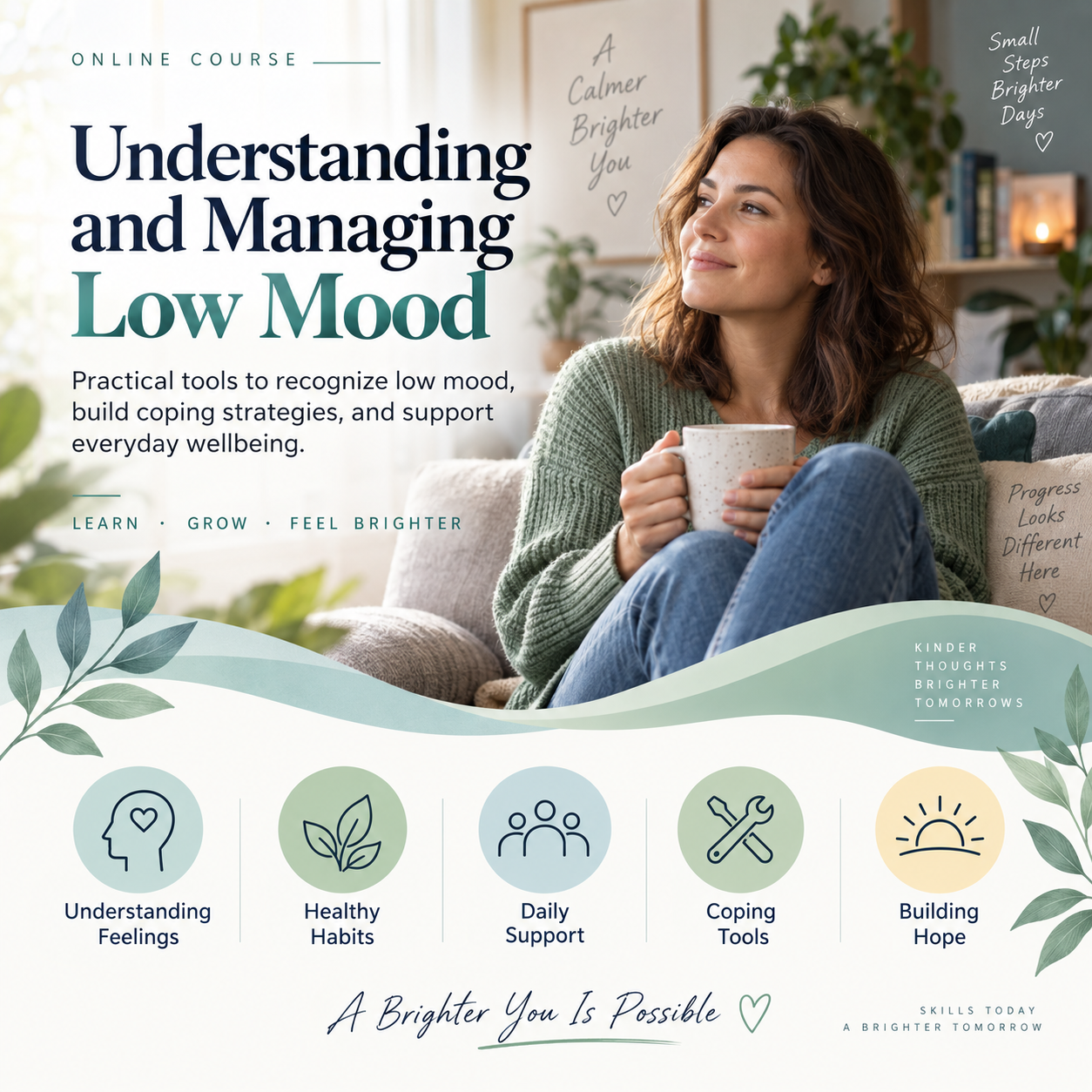
Understanding and Managing Low Mood
Compassionate guidance • Practical tools • Evidence-informed
Course Overview
When low mood begins to affect your energy, motivation, confidence, or daily routine, it can be hard to know what to do next. This course gives you a clear, supportive way to understand what may be happening and learn practical strategies to respond with more clarity, calm, and control.
- Structured self-help guidance
- CBT-informed approach
- Practical everyday tools
- Supportive, easy-to-follow format
- When everything feels heavier — Low mood can quietly affect your sleep, focus, patience, confidence, and ability to enjoy everyday life.
- Guesswork keeps people stuck — Many people try to push through, wait it out, or blame themselves. But without the right understanding, progress can feel frustratingly slow.
- A clear first step matters — The sooner you understand the patterns behind low mood, the sooner you can begin making changes that feel realistic and manageable.
Practical Approach
Instead of vague encouragement or overwhelming information, you’ll get a practical framework to help you understand low mood, recognise common patterns, and begin applying strategies that support steadier daily wellbeing.
Inside this course
- A clearer understanding of what low mood can look and feel like
- Common thought, behaviour, sleep, and stress patterns that may keep it going
- Practical ways to rebuild routine, momentum, and self-trust
- Gentle strategies you can begin using in day-to-day life
- Guidance on when additional professional support may be important
What You’ll Learn
- Clarity — Understand low mood more clearly so it feels less confusing, less personal, and more manageable.
- Direction — Replace uncertainty with a structured starting point that helps you focus on the steps that matter most.
- Practical tools — Build a toolkit of realistic strategies you can return to when motivation dips or daily life feels harder to manage.
- Confidence — Take action with more reassurance, knowing you’re following a grounded and supportive approach.
Who This Is For
- People who feel emotionally flat, drained, stuck, or persistently low
- Anyone noticing low motivation, disrupted routine, reduced enjoyment, or falling confidence
- Those who want practical support rather than generic advice
- People looking for a calm, structured first step they can begin at their own pace
- Individuals who want to better understand when self-help may help and when extra support may be needed
- Anyone ready to stop circling the problem and start taking informed action
Don’t let low mood keep deciding how your days feel
Waiting for things to improve on their own can leave you feeling more stuck. This course offers a more supportive next step: clear understanding, practical guidance, and a structured path you can start using right away.
- Why start now?
- Because early understanding can make it easier to regain momentum, rebuild helpful habits, and respond with intention instead of exhaustion.
Why Choose This Course
Course Benefits
This course offers a calm, structured introduction to the subject, combining clear explanations with practical reflection points and guidance on when additional professional support may be appropriate.
If you want a clearer understanding of low mood and a more grounded way to respond to it, this course gives you a thoughtful starting point you can return to again and again.
Next Steps
If Understanding and Managing Low Mood is relevant to your current needs, enrol to build a clearer understanding of the subject and gain practical guidance you can review at your own pace.
Use the course as an educational resource to support informed decisions and, where appropriate, prepare for more productive conversations with qualified professionals.
Important Note
Important: This course is for educational and self-help purposes only. It is not a replacement for diagnosis, therapy, or medical care.
This course is for education and self-awareness and is not a substitute for diagnosis, treatment, therapy, or personalised care from a qualified professional. If you are concerned about your safety, someone else’s safety, or symptoms that are severe or worsening, seek appropriate professional or emergency support.
Related Topics
Low mood, Mood management, Mental wellbeing, Motivation, Self-care, Coping strategies, Daily routine, Emotional health, Sleep, Support options, Warning signs, Recovery