Understanding Trauma and PTSD
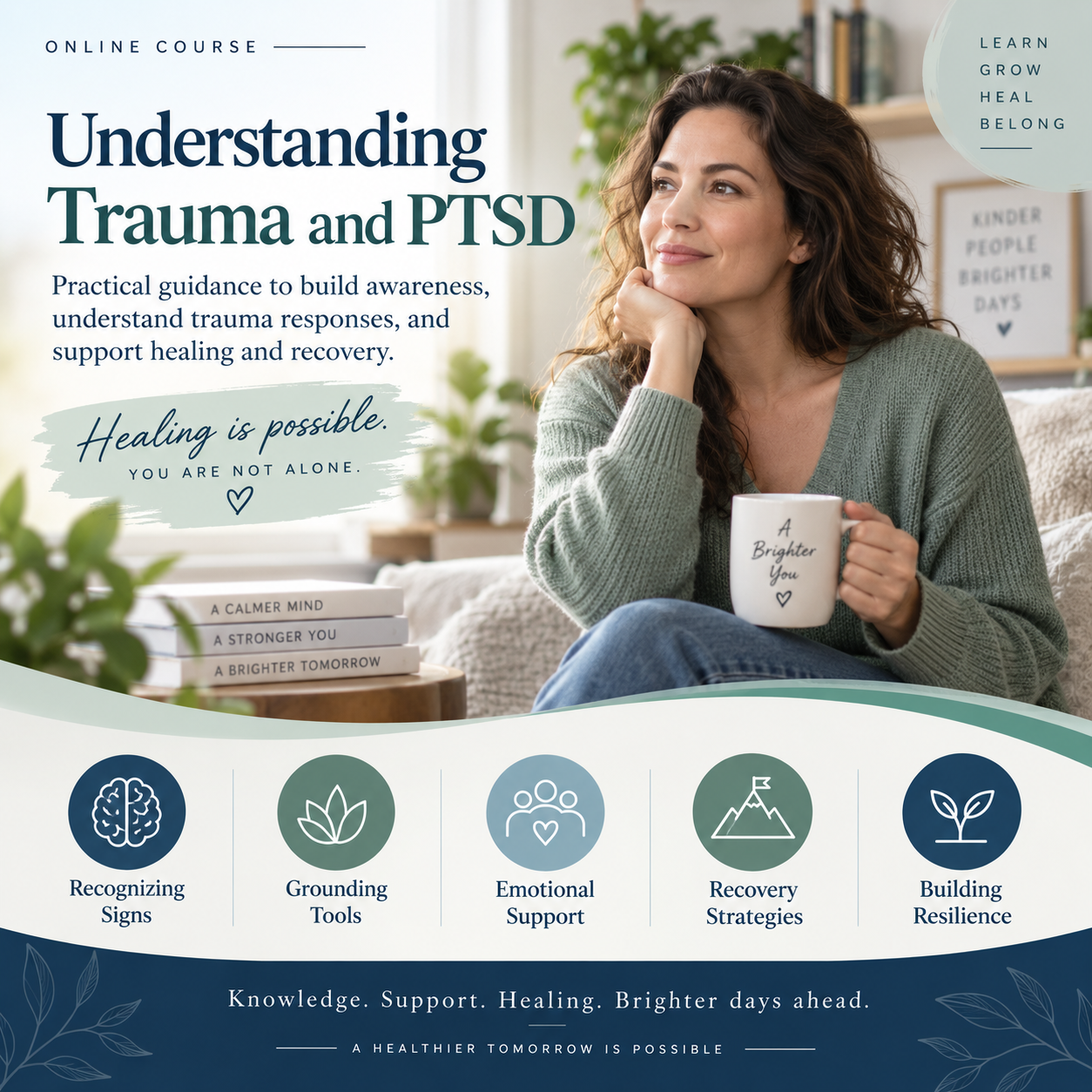
Understanding Trauma and PTSD
A practical introduction to Understanding Trauma and PTSD, with clear lessons on key concepts, common challenges, and useful daily habits. Learners gain understanding, confidence, and actionable tips for informed decisions, healthier routines, and sustainable progress in everyday life. This supports balanced learning, confidence, better habits, informed choices, and healthier wellbeing.
$59
Understanding Trauma and PTSD
Trauma-informed • Supportive • Evidence-aware
Course Overview
When trauma continues to affect your sleep, focus, emotions, relationships, or sense of safety, it can feel like the past is still shaping the present. This course offers a clear, compassionate introduction to trauma and PTSD, helping you understand what may be happening and explore supportive next steps with greater confidence.
- Trauma-informed guidance
- Clear, beginner-friendly explanations
- Practical coping insights
- Designed to complement professional support
- When trauma does not feel “over” — Trauma can continue showing up through flashbacks, nightmares, emotional numbness, hypervigilance, guilt, or a constant sense of being on edge.
- Confusion can keep people stuck — Many people blame themselves, minimise what happened, or do not realise how strongly trauma responses can affect daily life, relationships, and wellbeing.
- Understanding creates a safer starting point — The more clearly you understand trauma patterns, the easier it becomes to seek the right support, make sense of your reactions, and take steadier next steps.
Practical Approach
Instead of overwhelming information or vague advice, this course gives you a grounded framework to understand trauma and PTSD, recognise common symptoms and patterns, and explore practical, recovery-supportive next steps.
Inside this course
- What trauma and PTSD are, and how they can affect mind and body
- Common symptoms such as re-experiencing, avoidance, emotional numbing, and hyperarousal
- How trauma responses can affect sleep, concentration, safety, and relationships
- An introduction to complex PTSD and why trauma can show up differently from person to person
- Practical guidance on coping, support-seeking, and helpful next steps
- How professional treatment and trauma-focused therapies may fit into recovery
What You’ll Learn
- More clarity — Understand trauma responses more clearly so your experiences feel less confusing and less isolating.
- More self-understanding — Learn how trauma may affect thoughts, emotions, behaviour, and relationships without reducing your experience to self-blame.
- More direction — Get a clearer sense of which coping approaches may help, when professional support may be needed, and what trauma-informed care can look like.
- More confidence to seek support — Move from uncertainty toward informed action, whether that means building understanding, starting therapy conversations, or identifying your next safe step.
Who This Is For
- People who want to better understand trauma, PTSD, or complex PTSD in a calm, accessible way
- Anyone noticing trauma-related patterns such as flashbacks, avoidance, feeling on edge, numbness, shame, or sleep disruption
- Those looking for educational guidance before or alongside therapy or professional support
- People supporting a loved one and wanting a better understanding of trauma responses
- Individuals who want practical, trauma-sensitive guidance rather than generic wellbeing advice
- Anyone ready to replace uncertainty with clearer understanding and more informed next steps
Don’t let unanswered trauma patterns keep shaping your life in the background
The longer trauma responses remain misunderstood, the easier it is for them to affect daily life without explanation. This course offers a more supportive place to begin: clearer knowledge, practical insight, and a trauma-aware framework for taking your next step with more confidence.
- Why start now?
- Because understanding trauma earlier can make it easier to seek the right support, reduce confusion, and feel more equipped to respond with care rather than overwhelm.
Why Choose This Course
Course Benefits
This course offers a calm, structured introduction to the subject, combining clear explanations with practical reflection points and guidance on when additional professional support may be appropriate.
If you want to better understand trauma and PTSD, this course provides a thoughtful, supportive starting point. It is designed to help you make sense of trauma responses, recognise helpful pathways forward, and feel more informed about what healing support can involve.
Next Steps
If Understanding Trauma and PTSD is relevant to your current needs, enrol to build a clearer understanding of the subject and gain practical guidance you can review at your own pace.
Use the course as an educational resource to support informed decisions and, where appropriate, prepare for more productive conversations with qualified professionals.
Important Note
Important: This course is for educational and self-help purposes only. It is not a substitute for diagnosis, trauma therapy, crisis support, or medical care.
This course is for education and self-awareness and is not a substitute for diagnosis, treatment, therapy, or personalised care from a qualified professional. If you are concerned about your safety, someone else’s safety, or symptoms that are severe or worsening, seek appropriate professional or emergency support.
Related Topics
Trauma, PTSD, Trauma responses, Flashbacks, Hypervigilance, Nightmares, Emotional numbness, Safety, Coping strategies, Professional support, Recovery, Trauma-informed care